Cavatelli sausage and mushrooms
(Scroll down for the english translation)
Cosa vi serve
Farina tipo 1, semola di grano duro, olio evo, cipolla, aglio, rosmarino, olio, salsiccia, funghi chiodini, vino rosso, formaggio grana grattugiato.
Introduzione
Partiamo come al solito dal fatto che la pasta quando è possibile la facciamo in casa. Poco tempo fa ho comprato un nuovo aggeggio che serve a fare i cavatelli. I cavatelli sono una pasta tipica del Molise, principalmente, ma li troviamo anche in Abruzzo e in Puglia, e fanno parte della famiglia delle paste “strascinate”. Diciamo che qualsiasi nonna molisana fa i cavatelli a mano, senza l’ausilio di nessun attrezzo meccanico. Ma visto che le nostre capacità tecniche e manuali arrivano fin là, l’ausilio di un oggetto bellissimo e fatto apposta aiuta molto. Se vi viene la curiosità di comprarne uno uguale, non costa neanche tantissimo, lo trovate online sui siti soliti. Io mi ci sono appassionato subito, visto che è una bella alternativa alle solite tagliatelle fatte in casa.
Preparazione
Cominciamo dalla pasta. Considerate un centinaio di grammi, anche abbondanti, di farina a persona e fate il solito misto di semola di grano duro e farina tipo 1. In genere io faccio 50/50, ma sentitevi liberi di sperimentare. Aggiungete un pizzico di sale, acqua, impastate per una decina di minuti e poi mettete via l’impasto coperto e a temperatura ambiente per un’ora. Poi prendete l’impasto un po’ alla volta, fate dei vermoni del diametro di circa due centimetri e passateli con la macchina per i cavatelli. Fate cadere la pasta in una ciotola avendo cura di infarinarla quanto basta perché i cavatelli non si appiccichino tra loro.
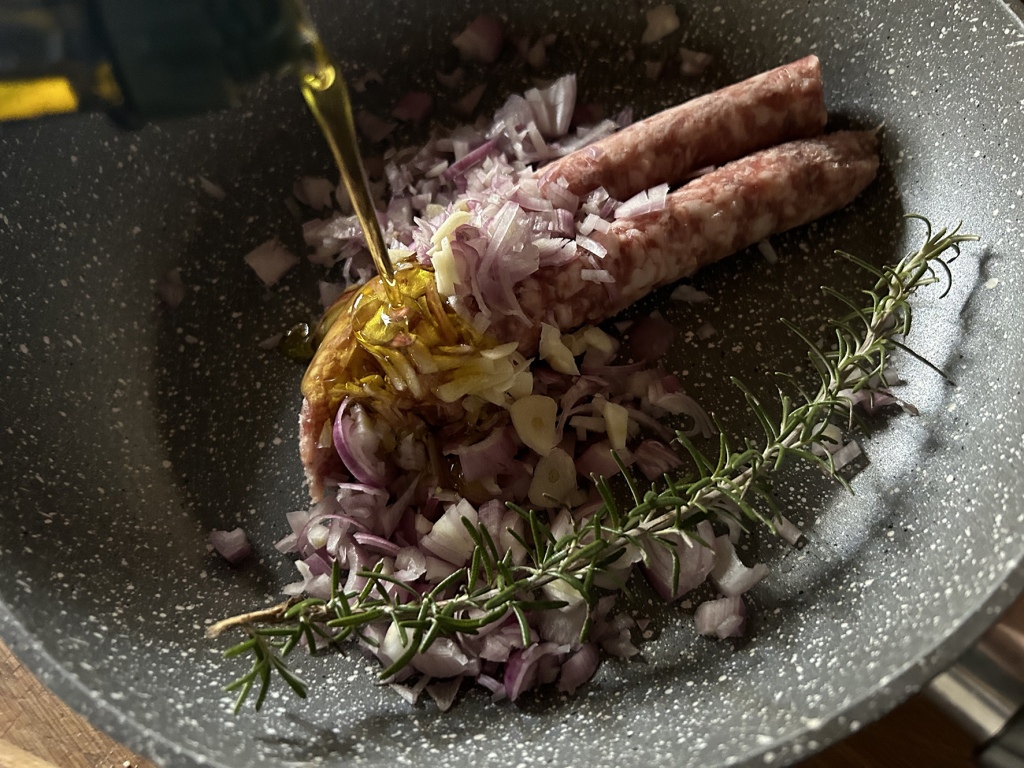
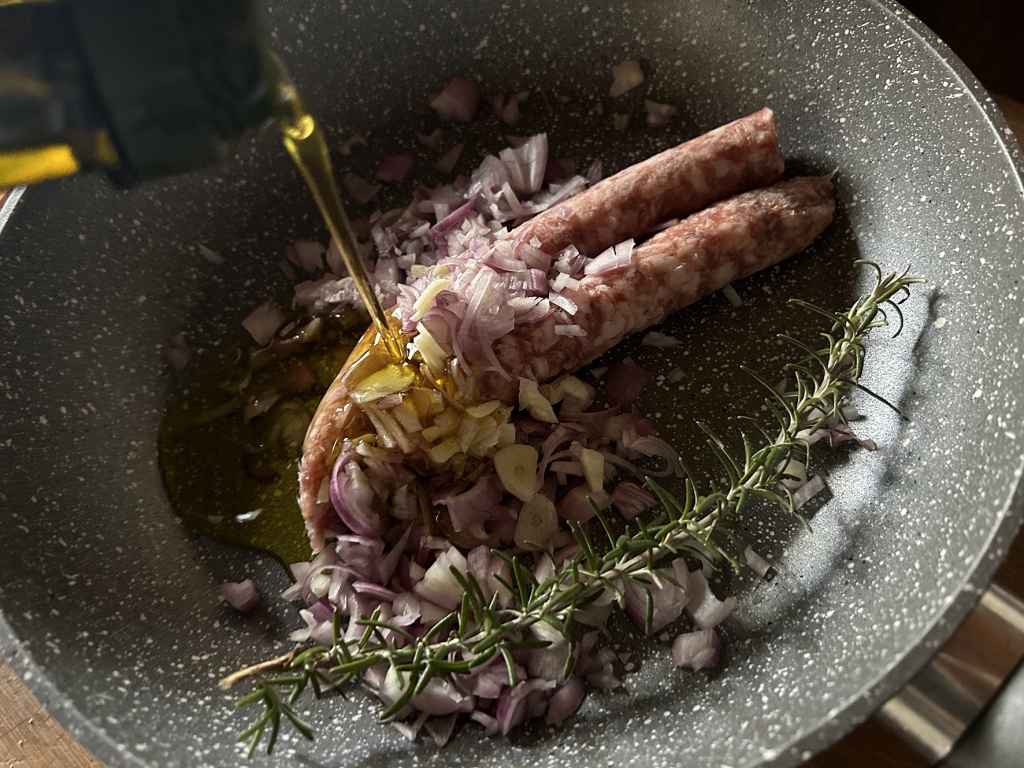
In una padella mettete un abbondante trito di cipolla, uno spicchio d’aglio tritato, la salsiccia privata della pelle, olio ovviamente, e un rametto di rosmarino lasciato intero. Fate cuocere a fuoco lentissimo e con una paletta di legno sminuzzate la salsiccia durante la cottura. A fine cottura togliete il rosmarino e aggiungete i chiodini. Questa volta son stato fortunato, i chiodini me li ha regalati già cucinati la mia amica Chiara domenica scorsa. La prossima volta che mi capita di raccoglierli e di cucinarli io vi faccio le foto e vi spiego come si fa. Se sapete già come farli non serve che vi spiego nulla, se proprio siete pigri li trovate già belli e cucinati in lattina al supermercato. Quelli già pronti non sono buoni uguale, per forza, ma da qualche parte dovrete pure cominciare.
Date una bella sfiammata col vino rosso. e il condimento è pronto.
Nel frattempo ad un certo punto avrete messo la pentola dell’acqua sul fuoco, fate cuocere i cavatelli, che di solito ci mettono cinque/sei minuti, ma con la pasta fatta in casa non si sa mai, assaggiateli spesso. Quando saranno pronti scolateli, prendendo un po’ di acqua di cottura che vi servirà per saltare la pasta in padella col condimento.
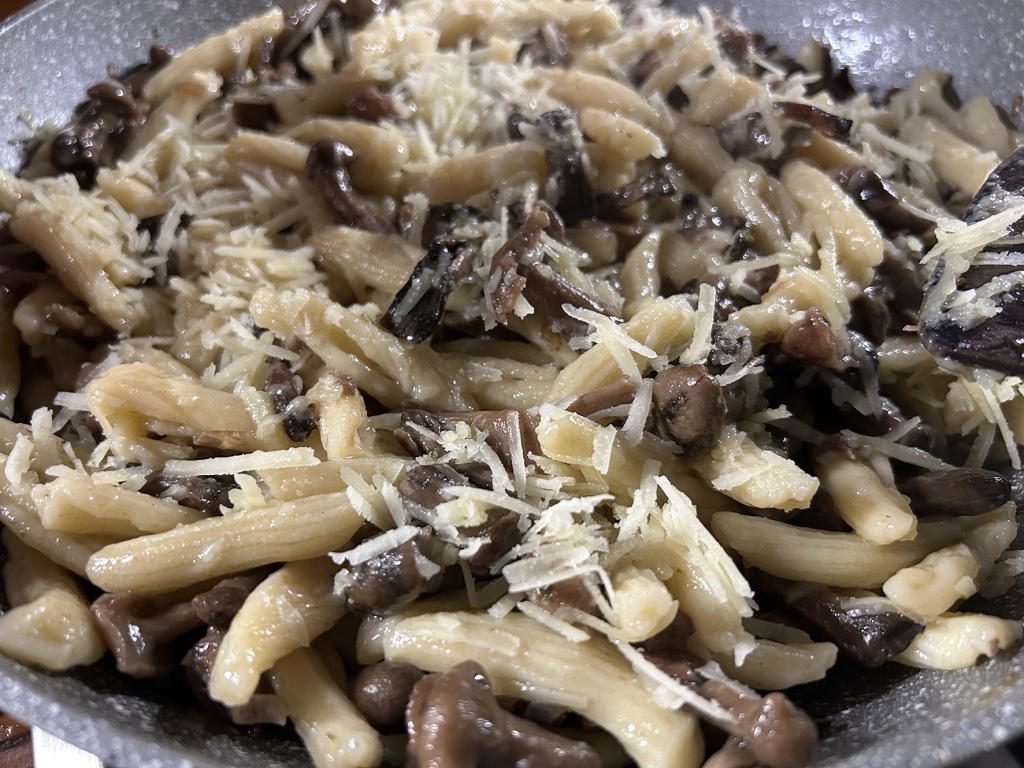
Saltate velocemente in padella, aggiungete il grana e anche questa è fatta.
A forza di fare la pasta fatta in casa, ho capito una cosa che, sarà banale, ma magari non ci avevate mai fatto caso nemmeno voi, e allora condivido. Perché da sempre vi dicono di usare un po’ di acqua di cottura per saltare poi la pasta in padella con il sugo. Però c’è un fatto: che quando usate la pasta secca normalissima comprata al supermercato, l’acqua di cottura è acqua salata, e sicuramente ci sarà anche dell’amido che gira, va bene, ma è poca roba. Quando invece cuocete la pasta fatta in casa, e buttate in acqua la pasta fresca, che è tutta bella infarinata per evitare che si appiccichi in giro, ecco quella farina lì nell’acqua fa una differenze enorme. Infatti se usate quell’acqua per saltare la pasta in padella con qualsiasi condimento, ottenete una cremosità completamente diversa.




What you need
Type 1 flour, durum wheat semolina, extra virgin olive oil, onion, garlic, rosemary, oil, sausage, honey mushrooms, grated parmesan cheese.
Introduction
As usual, let’s start from the fact that we prefer making pasta at home when possible. Not long time ago I bought a new device that is used to make cavatelli. Cavatelli are a typical pasta of the italian region called Molise, mainly, but we also find them in Abruzzo and Puglia, and they are part of the “strascinate” pasta family. Let’s say that any grandmother from Molise makes cavatelli by hand, without the aid of any mechanical tools. But since our technical and manual skills don’t get that far, a beautiful purpose-made object helps a lot. If you are curious to buy one, it doesn’t even cost much, you can find it online on the usual sites, magic words are “macchina per cavatelli”. What I can say is that I immediately fell in love with it, since it is a nice alternative to the usual homemade tagliatelle.
Preparation
Let’s start with pasta. Consider a hundred grams, even abundant, of flour per person and make the usual mix of durum wheat semolina and type 1 flour. Generally I do 50/50, but feel free to experiment (more durum, less flour, basically). Add a pinch of salt, add water, knead for about ten minutes and then put the dough away covered and at room temperature for an hour. Then take the dough a little at a time, make worms about 2 centimeters diameter and pass them through the cavatelli machine. Drop the cavatelli into a bowl, taking care to flour them just enough so they do not stick together.
In a pan, put some oil, a good quantity of chopped onion, a chopped clove of garlic, the sausage without the skin, and a rosemary sprig. Cook over a very low heat and use a wooden spatula to chop the sausage during cooking. At the end of cooking, get rid of the rosemary and add the mushrooms. This time I was lucky, my friend Chiara gave me these honey mushrooms as a gift, already cooked, last sunday. The next time I happen to harvest (collect? pick them up? what’s the right word?) some of them and cook them, I’ll take photos and explain how it’s done. If you already know how to cook them, I don’t need to explain anything to you. And if you’re really lazy you can find them already cooked in cans at the supermarket. The ready-made in a can ones are not as good, obviously, but you have to start somewhere.
Give a nice boost with red wine over high heat, and the sauce is ready.
In the meantime, at a certain point, you will have put the pan of water on the heat, to cook the cavatelli. Again,how we cook pasta: lots of water, some salt, put the pan on the fire and when it starts boiling put the pasta into the water. Homemade cavatelli usually take five/six minutes into boiling water, but with homemade pasta you never know, taste them often. When they are ready, drain them, taking a little of the cooking water which you will need to sauté the pasta in the pan with the sauce.
So, quickly sauté in the pan, add the parmesan and it’s done.
By dint of making homemade pasta, I understood something that may be trivial, but maybe you had never noticed it either, so I’ll share. Because they always say to use a little cooking water and then sauté the pasta in the pan with the sauce. But there is a fact: when you use normal dried pasta bought at the supermarket, the cooking water is salted water, and there will certainly also be some starch floating around, that’s fine, but it’s not that much. When you cook homemade pasta, instead, and throw the fresh pasta, which is all well floured to prevent it from sticking around, into the water, that flour there in the water makes a huge difference. In fact, if you use that water to sauté
 Villa della Comare